
A Guide to Spinal Cord Injury Lawsuits in Florida
Learn the true cost of spinal cord injuries so you understand how much your personal injury or medical malpractice claim might be worth in Tampa
A spinal cord injury is one of the most devastating injuries a person and their family can experience—physically, emotionally, and financially.
In Florida, these injuries can happen in many ways, from truck accidents and serious falls to medical errors and birth injuries that cause lifelong paralysis or mobility loss. When spinal damage occurs because of someone else’s negligence, the consequences can be overwhelming—but, fortunately, you do have legal options.
In this article, we’ll explain what you need to know about spinal cord injury lawsuits in Florida, including how the level of injury impacts lifetime costs and compensation and when you may have grounds to file a personal injury or medical malpractice claim.
If you or your child has suffered a spinal cord injury caused by negligence, the Tampa catastrophic injury lawyers at Palmer Lopez can help you understand your rights, navigate the complex insurance and medical systems, and fight for the compensation your family deserves. Learn more by scheduling a free consultation.
What are the 5 levels of the spinal cord?
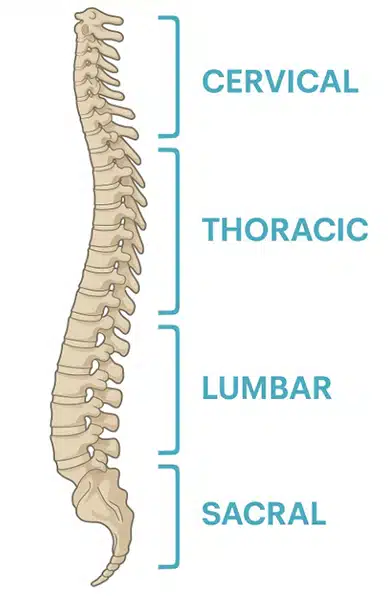
The spinal cord is divided into 5 main sections: cervical, thoracic, lumbar, sacral, and coccygeal. Each section controls movement and sensation in different parts of the body:
- Cervical (neck area). Controls signals to the head, neck, diaphragm, shoulders, arms, and hands
- Thoracic (upper and mid-back). Affects the chest, abdominal muscles, and parts of the back
- Lumbar (lower back). Controls the hips and legs
- Sacral (pelvic area). Affects the thighs, lower legs, feet, reproductive organs, bowel, and bladder
- Coccygeal (tailbone). Can result in partial loss of function in legs, bowel, and bladder
Where along this structure an injury occurs will determine how much mobility, feeling, or function a person retains.
What is considered a high spinal cord injury?
A high spinal cord injury is one that affects the upper cervical region—typically between the C1 and C4 vertebrae near the top of the spine. These injuries are among the most severe because they can disrupt messages between the brain and nearly the entire body.
People with high-level injuries often lose movement and sensation in both of their arms and legs (a condition known as quadriplegia or tetraplegia) and may require assistance with breathing, mobility, and daily activities.
What is the most serious type of spinal cord injury?
The most serious spinal cord injuries are complete injuries in the high cervical region, where all communication below the injury site is lost. This can cause total paralysis from the neck down and loss of independent breathing.
These injuries are not only life-altering but also extremely costly—requiring round-the-clock medical care, assistive technology, and extensive home modifications.
What is considered a traumatic spinal cord injury?
A traumatic spinal cord injury happens when an external force damages the spinal cord, such as from a car crash, birth trauma, fall, sports injury, or act of violence. These differ from non-traumatic spinal cord injuries, which result from internal causes like tumors, infections, or degenerative diseases.
Traumatic injuries are common in personal injury and medical negligence cases because they’re often caused by preventable accidents.
When another person or organization’s negligence leads to such an injury, you may have grounds to file a lawsuit in Florida to recover compensation for your medical bills, lost income, pain and suffering, and more.
How much does a spinal cord injury cost financially?
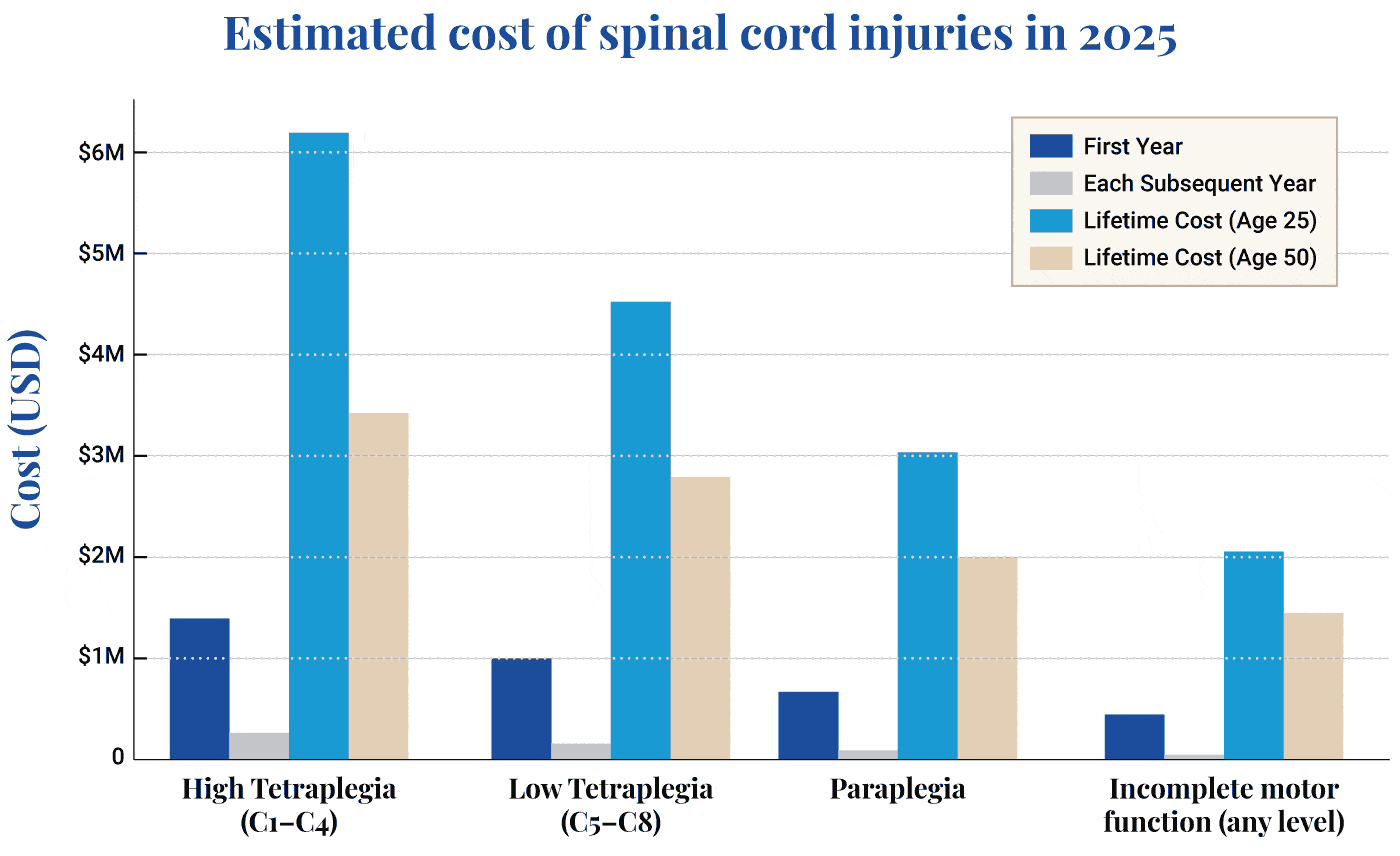
The financial toll of a spinal cord injury can be staggering. As the chart below shows, the first year after an injury is typically the most expensive, with costs ranging from several hundred thousand dollars to well over a million, depending on the level of paralysis.
And those expenses don’t end after recovery—most survivors face tens or even hundreds of thousands of dollars in ongoing yearly costs for the rest of their lives.
For example, someone with high tetraplegia (C1–C4) may face more than $1.3 million in medical expenses during the first year alone, followed by over $240,000 each year after.
Even lower-level spinal injuries, like paraplegia or incomplete motor function, still cost millions of dollars over the course of a lifetime.
Data source: https://www.christopherreeve.org/todays-care/living-with-paralysis/costs-and-insurance/costs-of-living-with-spinal-cord-injury/
(Amounts have been adjusted for inflation in 2025.)
Please note that these figures only represent direct medical and care-related costs, such as hospitalizations, surgeries, medications, and assistive devices like wheelchairs or ventilators, so they don’t tell the whole story.
Many people with spinal cord injuries will have additional needs and expenses like:
- Home and vehicle modifications. Installing ramps, lifts, widened doorways, or adaptive vehicles can cost tens of thousands of dollars.
- In-home nursing or personal care. Long-term assistance for daily living, even part-time, adds up quickly.
- Lost income and career changes. Many victims can’t return to their previous jobs, resulting in lost lifetime earnings and reduced financial security.
- Emotional and mental health care. Ongoing counseling for depression, PTSD, and anxiety is common but rarely included in cost estimates.
- Out-of-pocket costs for family caregivers. Loved ones often lose wages or spend their own money on travel, lodging, or unpaid caregiving time.
When you add these indirect expenses, the true lifetime cost of a spinal cord injury can reach well into the millions, especially for younger adults who have decades of care ahead.
That’s why it’s essential to have a Tampa personal injury attorney with experience in spinal cord claims calculate the full extent of your long-term costs to ensure your settlement reflects all of your future needs.
When can I sue someone after a spinal cord injury in Tampa?
You can file a lawsuit after a spinal cord injury if someone else’s negligence, recklessness, or intentional actions caused the harm. In Florida, this often applies to situations like car accidents, motorcycle crashes, falls on unsafe property, nursing home abuse, and medical negligence by a third party.
To have a valid claim, you must be able to show that:
- The other party had a duty to act safely.
- They failed to meet that duty.
- Their actions directly caused your spinal cord injury.
- You suffered damages such as medical bills, lost income, long-term care needs, or pain and suffering as a result.
Even if you have insurance coverage, it often doesn’t come close to covering what you’ll need for ongoing medical care, rehabilitation, home modifications, and lost earning capacity, so a lawsuit is often the best and only option to protect your future.
What is medical negligence for spinal cord injury?
In cases involving medical mistakes that lead to spinal cord injuries, medical negligence occurs when someone is injured because a doctor or other healthcare provider failed to meet the accepted “standard of care” that another provider with similar education and experience would have provided in a similar situation.
Examples of medical negligence that can cause or worsen spinal cord damage include:
- Surgical errors during spinal, orthopedic, or neurosurgical procedures
- Anesthesia errors, especially with neuraxial anesthesia procedures like spinal and epidural blocks
- Misdiagnosis or failure to diagnose a spinal fracture, infection, or abscess
- Nursing errors, like dropping or mishandling a patient during transfer
- Delayed treatment after trauma, leading to preventable worsening of paralysis
- Misreading imaging scans such as MRIs or CTs
Because medical negligence cases often require expert testimony, careful review of medical records, and a detailed understanding of both spinal anatomy and Florida malpractice laws, it’s essential to work with a Tampa medical malpractice attorney who can sort through the details and build a strong case to get you the full compensation you deserve.

How To File a Complaint Against a Hospital or Emergency Room
Learn who to contact and what steps to take to make your voice heard in Florida.
When is a spinal injury in a newborn a doctor’s fault?
A newborn’s spinal cord can be injured during labor, delivery, or immediate postnatal care if medical professionals fail to act appropriately. These cases typically fall under birth injury malpractice and can happen when a healthcare provider uses excessive force, mishandles the baby, or ignores signs of distress.
A spinal injury in a newborn may be considered physician negligence when:
- Forceps or vacuum extractors are used improperly.
- Excessive traction is applied to the baby’s neck or spine during delivery.
- Breech delivery is poorly managed or performed without proper precautions.
- A doctor fails to recognize and respond to shoulder dystocia.
- A C-section is delayed when there are clear signs it is necessary.
- The baby is dropped or mishandled after birth.
- Infections or spinal conditions in the newborn are not diagnosed or treated in time.
Since an infant cannot describe symptoms, the diagnosis of a birth-related spinal injury is often delayed, and many families don’t learn the true cause until years later.
There are strict deadlines for filing a birth injury claim, so if you believe your child’s spinal cord injury was caused by medical negligence, it’s best to contact a Tampa birth injury attorney as soon as possible. Acting quickly helps protect your child’s rights and gives your family the best chance at securing answers, justice, and compensation.
How much compensation will I get for a spinal injury?
Spinal cord injury cases often lead to very high settlements and verdicts, frequently ranging from hundreds of thousands of dollars to several million. Catastrophic injuries—especially those involving paralysis—can exceed these ranges because the lifetime costs are so significant.
Before looking at the factors that affect value, it helps to understand the types of damages you may be awarded in a Florida spinal injury case:
- Medical bills and future medical care
- Surgeries, rehab, and long-term therapy
- Wheelchairs, lifts, and other medical equipment
- Home and vehicle modifications
- In-home nursing or attendant care
- Lost wages and reduced earning capacity
- Pain and suffering
- Emotional distress and loss of enjoyment of life
- Loss of consortium, which compensates a spouse for the impact on the relationship
So, what determines how much a spinal injury case is worth?
While every claim is different, key factors that influence the size of a settlement or verdict include:
- Severity and level of injury. High cervical injuries causing quadriplegia result in the highest compensation because they require lifelong medical care. Paraplegia and incomplete injuries still lead to significant awards, but typically at lower levels.
- Age at the time of injury. Younger individuals often receive more because they face decades of care costs and lost earnings.
- Your job and earning capacity. If your injury ends your career or limits your ability to work, compensation increases to reflect those lost wages and future income. Individuals with higher-paying careers before the accident will also typically be awarded more to reflect their higher loss of income.
- Future medical needs. Long-term or permanent care—surgeries, therapy, home health aides, home modifications—greatly increases the value of a claim.
- Impact on daily life. Loss of independence, chronic pain, mobility limitations, and emotional suffering all contribute to higher damages.
- Type of negligence involved. Cases involving reckless behavior (like drunk driving or severe medical errors) may result in higher awards.
A spinal cord injury claim is one of the most complex and high-value personal injury cases you can pursue. An experienced Tampa spinal injury attorney can calculate your lifetime costs and fight for the compensation you need to provide for yourself and your family.
Looking for an experienced spinal cord injury attorney in Tampa to help with your claim?
Spinal cord injury cases require attorneys who understand not only the law but also the medical realities, long-term care needs, and lifetime financial impact these injuries bring.
At Palmer Lopez, we work closely with spinal specialists, life-care planners, and financial experts to build cases that account for the full reality of your future—not just the immediate aftermath of the injury.
If you or someone you love suffered a spinal cord injury or wrongful death because of negligence, medical mistakes, or a preventable birth injury, don’t leave your recovery to chance.
Contact Palmer Lopez today for a free consultation and learn how our experience in complex injury and malpractice cases can help you secure the compensation and support you need to move forward.
References
Costs Of Living With A Spinal Cord Injury | Reeve Foundation. (n.d.). Christopher & Dana Reeve Foundation. https://www.christopherreeve.org/todays-care/living-with-paralysis/costs-and-insurance/costs-of-living-with-spinal-cord-injury/